
Last updated October 16, 2026
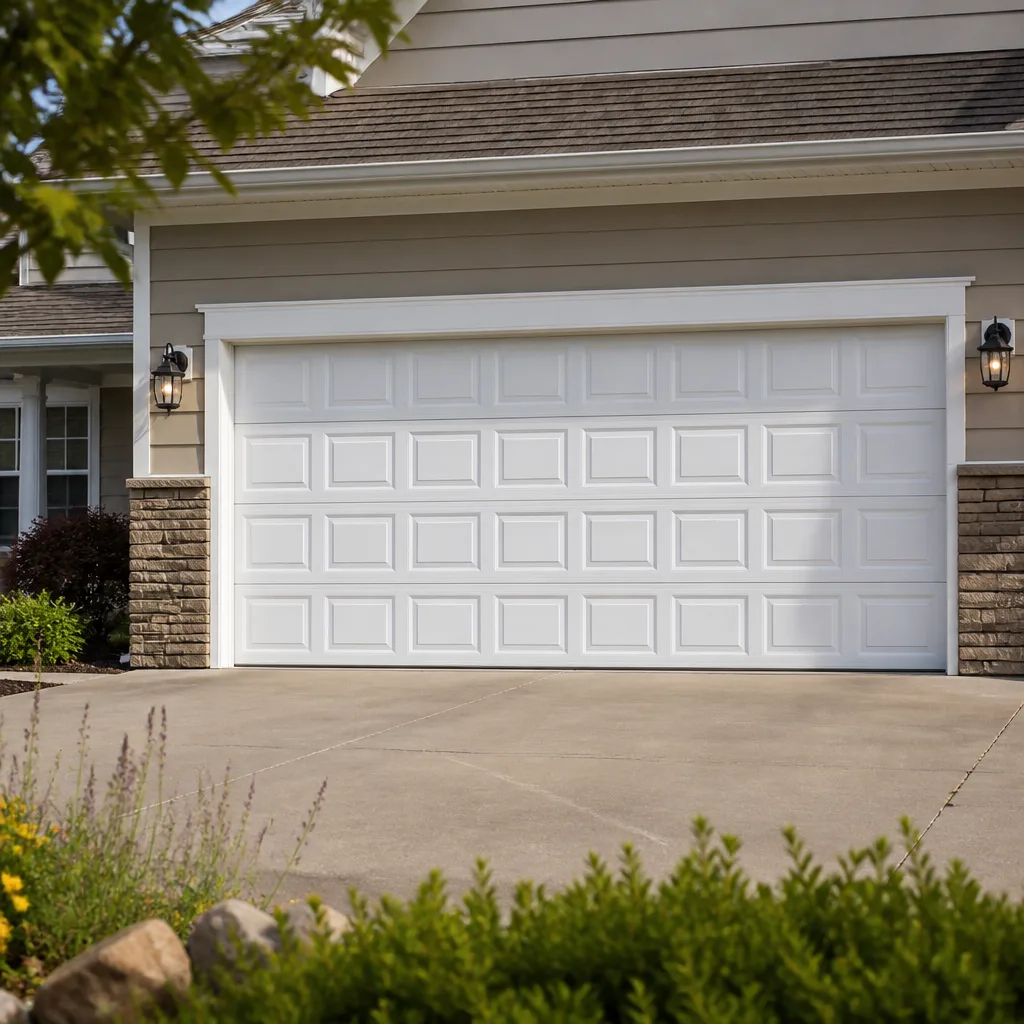 Raised-panel steel
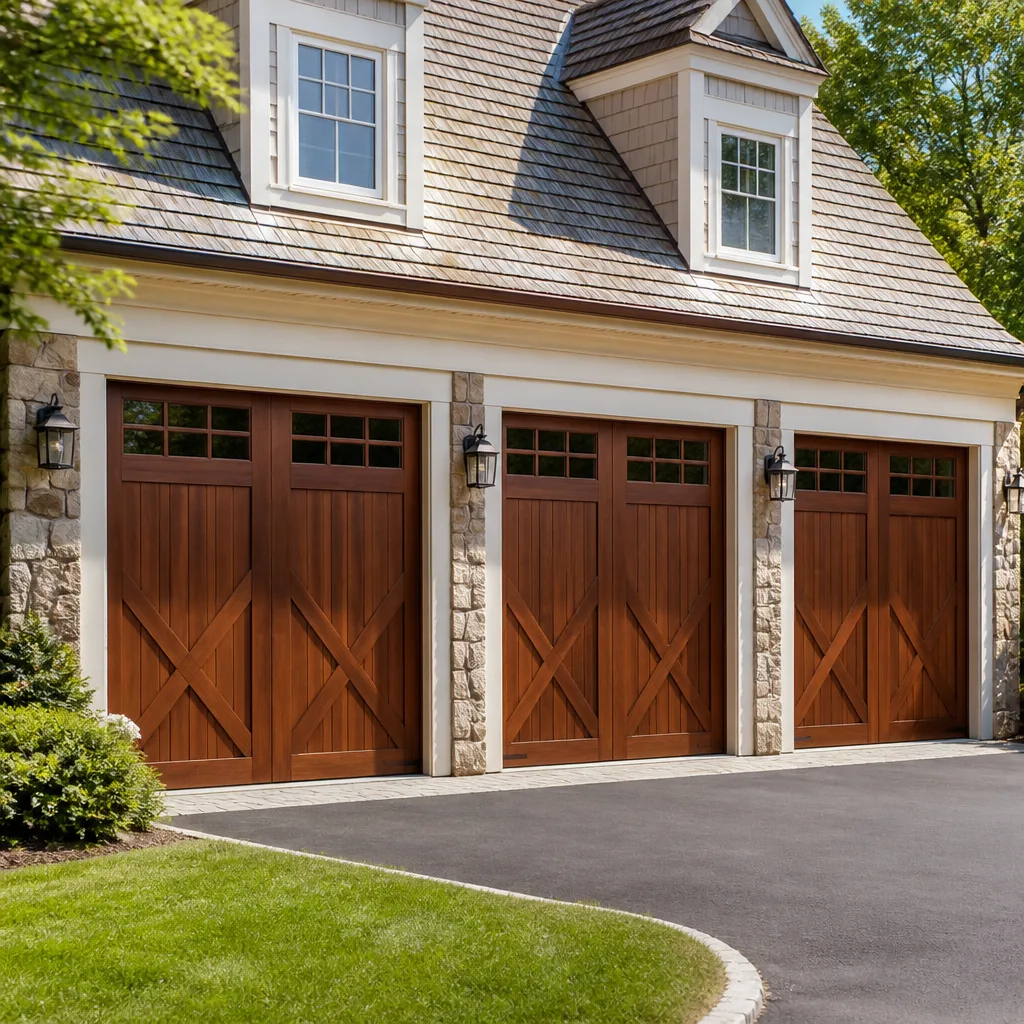 Carriage house
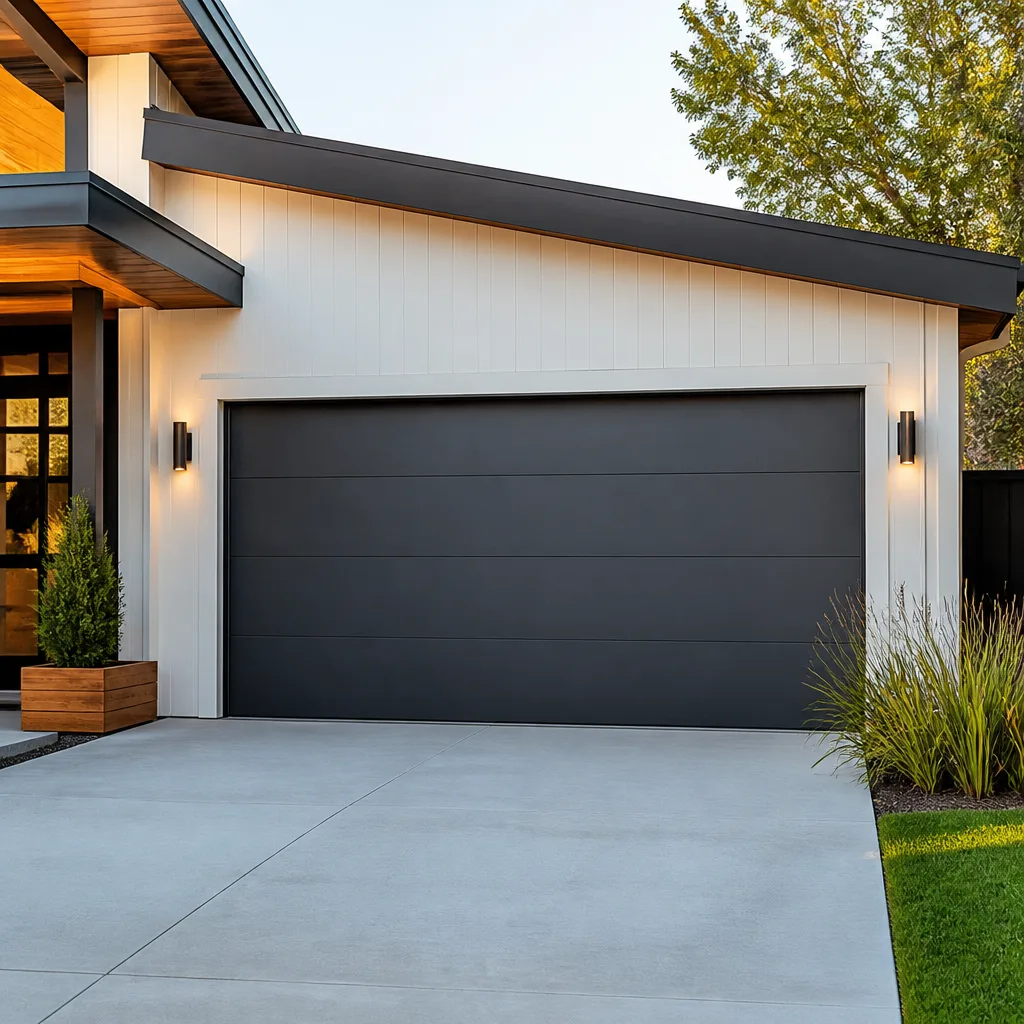 Modern flush
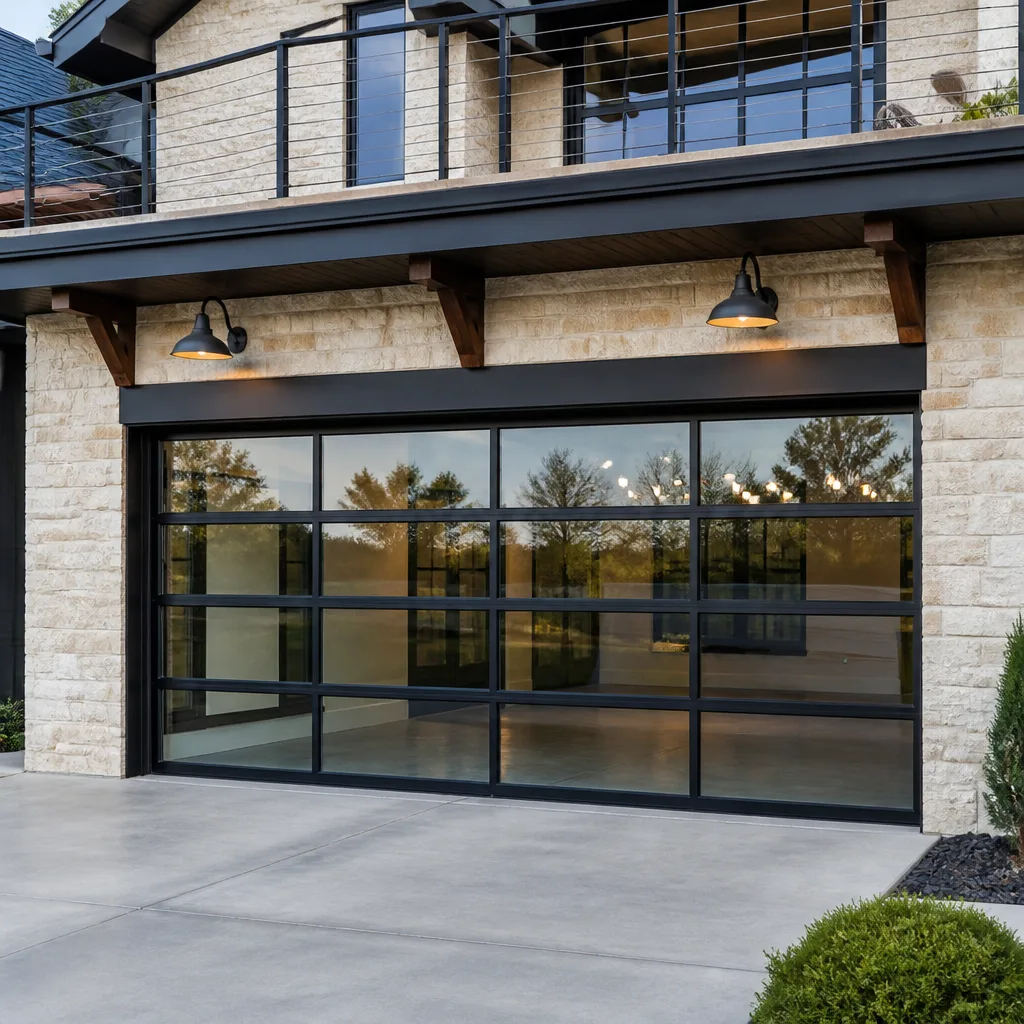 Full-view glass
 LiftMaster openers
 Chamberlain openers
Full 25-point door and opener safety check with every visit - springs, cables, rollers, tracks, and your LiftMaster or Chamberlain opener included
You get a price before we start. It does not change when the truck arrives.
Get your free estimateGarage Door Warning Signs: A Torrance Homeowner’s Reference Guide
Most garage door failures announce themselves weeks before they happen. The door moves a half-second slower. A sound you’ve never heard appears, then fades, then comes back. A cable frays one strand at a time while everyone in the house walks right past it. The problem is that nobody ever told you what these signals actually feel like from inside the house, standing in your own garage in Torrance, at 6:45 a.m. on a Tuesday. This guide exists to change that. You’ll learn to identify each warning sign in plain sensory terms, understand what it likely means, and know which ones demand immediate action and which can wait a few days.
A garage door that takes 2.3 seconds to open instead of 1.8 seconds is telling you something specific about your spring tension. A door that bangs shut and rebounds two inches is giving you a different message entirely. By the end of this Complete Guide to Garage Door in Torrance, you’ll know exactly what your door is saying, how urgent the message is, and what to do next. We’ve also grounded every sign in the realities of Torrance: the marine air that accelerates rust, the stucco homes where sound carries, the older door systems still running in places like Old Torrance and the Hollywood Riviera.
Quick Answer: What Are the Garage Door Warning Signs Every Torrance Homeowner Should Know?
The warning signs to watch for are: a grinding noise (roller or track problem), a loud bang like a gunshot (broken spring), rhythmic squeaking when the door moves (worn hinges), intermittent clicking from the opener (gear slip), a door that hangs visibly lower on one side when partway open (cable or spring imbalance), visible rust powder or dark grease lines beneath specific hardware (bearing or coupler failure), and a door that slows down or reverses without a visible reason (spring fatigue or opener force-setting drift). If you notice any of these, stop relying on the door as normal. Some need service this week. A few mean you should not use the door again until a trained professional has inspected it.
Styles & brands we work with
Table of Contents
- The Sound Taxonomy: What Your Garage Door Is Saying
- Visual Asymmetry: The One-Inch Test
- Speed and Force Changes: Measurable, Not Imaginable
- The Streaking-on-the-Floor Test
- Urgency Triage: Schedule, Stop, or Ignore
- How Torrance’s Climate Accelerates Specific Failures
- What Your Specific Door Brand Tells You
- When to Call a Professional
The Sound Taxonomy: What Your Garage Door Is Saying
The Grind: Roller or Track Problems
A grinding noise sounds like gravel being crushed under a boot, or like two pieces of coarse stone rubbing together. It usually follows the door’s movement: you hear it as the door goes up, and again as it comes down. This is not a sound the door makes when healthy. It points to one of two things: the rollers are worn down to the point where the wheel no longer spins freely (or the ball bearings inside have lost their grease and are grinding against the steel housing), or the track itself has been bent slightly inward so the roller is dragging against the metal edge instead of rolling in its channel.
In Torrance, we see track damage most often on homes where a car bumper has kissed the bottom panel or where an earthquake, even a small one, has caused the house to settle differently than the concrete slab. The track may look straight to the eye but be a quarter-inch out of line. That’s enough to cause a grind. Left alone, the roller will wear a flat spot, the track will develop a groove, and the door will eventually bind entirely. You’ll know the sound has moved from a minor grind to a serious one when it becomes loud enough to hear from inside the house.
The Bang: A Spring Break
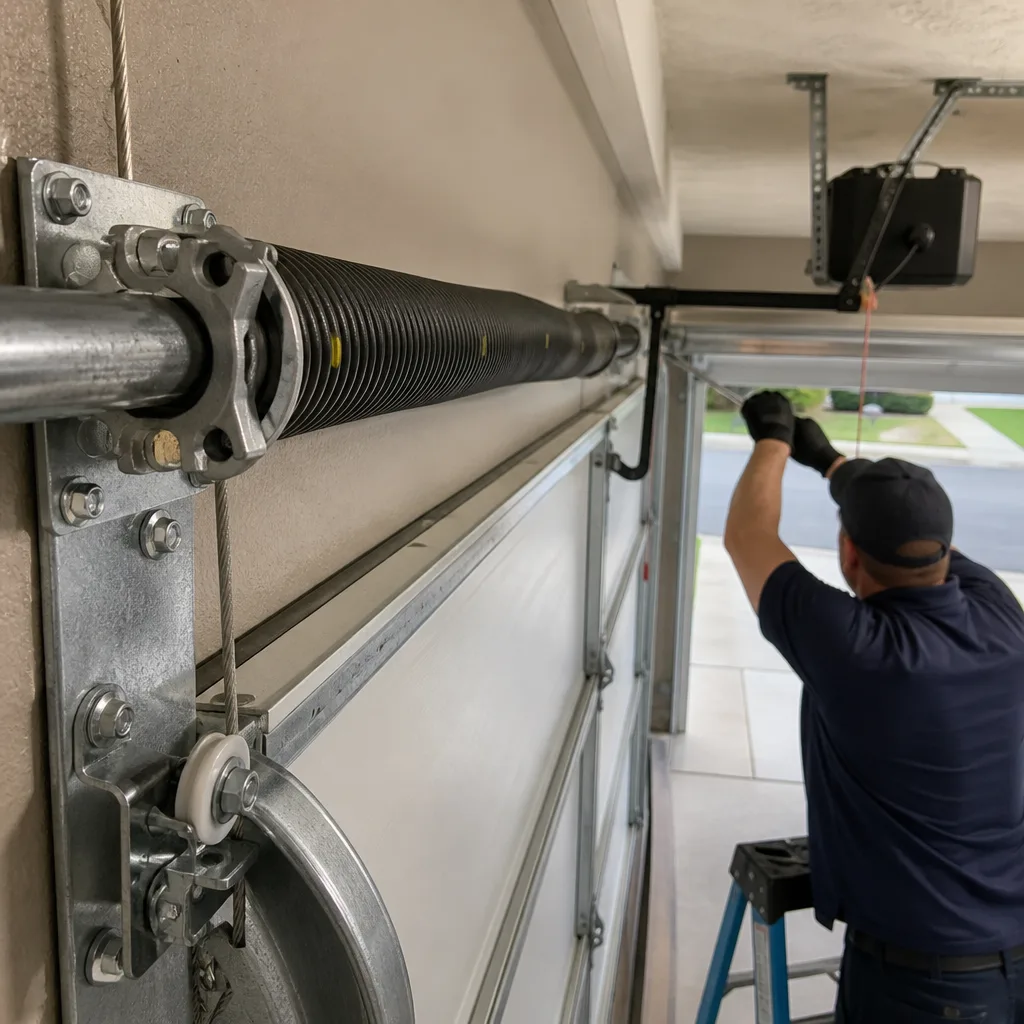
If you have ever heard what sounds like a gunshot or a car backfiring inside your garage, and then found the door sitting dead and heavy, you know this sound already. It is not subtle. It is the torsion spring snapping, and it happens in a single instant. The spring that broke is the horizontal coil mounted above the closed door, under extreme tension, and when it fails it releases all that stored energy at once.
This is not a sound to dismiss because “the door still works.” A door with one broken spring on a two-spring system will still open, but the opener motor is now doing the work of a missing counterweight. It will burn out the motor, strip the gears, or snap a cable within a few weeks. If you hear this bang, stop using the door. Call a professional.
One important safety note: never attempt to repair or adjust a torsion spring yourself. The spring is under enough tension to cause serious injury or death if it releases while you are working on it. This is the single most dangerous part in your home. A trained professional has the winding bars, the correct spring, and the experience to do the job safely.
The Rhythmic Squeak: Hinge Wear
A squeak that happens in a regular rhythm, matching the door’s movement, is almost always a hinge. Unlike a grind, which sounds rough and constant, a squeak sounds high-pitched and sharp. It repeats predictably. As each hinge passes through the curved section of the track, the metal-on-metal contact between the hinge pin and the hinge barrel produces that squeal. The fix is simple lubrication in the early stages, but if the hinge pin has worn down, the door panels will flex more than they should, and a panel can eventually crack or separate from the door. Torrance’s marine air makes hinge corrosion worse than in inland cities. We see it in the South Bay more than in Torrance’s inland neighbors, because the salt moisture in the air finds its way into every hinge pin on older doors.
The Intermittent Click: Opener Gear Slip
A clicking sound that comes from the opener unit itself, usually mounted on the ceiling, sounds like a plastic gear skipping a tooth. It is intermittent, not rhythmic. You might hear two clicks, then nothing, then three more. What you are hearing is the plastic drive gear inside the opener slipping because it has worn down to the point where the teeth no longer mesh with the worm gear above it.
On openers from LiftMaster and Chamberlain, this is a well-known failure point. We replace the gear and you get years more out of the opener. If you ignore it, the gear will eventually strip completely, the opener will run but the door will not move, and you’ll be replacing the entire opener instead of just the gear. The clicking is the early warning.
Visual Asymmetry: The One-Inch Test
When a garage door is healthy, it sits level. Here is how to test yours: stand inside the garage facing the closed door. Look at the bottom edge of the door where it meets the floor. There should be no visible gap that is wider on one side than the other. Now press the opener and let the door rise about halfway. Stand back and look at the bottom edge of the door compared to the horizontal track on each side. If one side is an inch lower than the other, you have found something most homeowners never notice.
A one-inch drop on one side always points to one of two causes. The first is a broken or fatigued extension or torsion spring on one side. Even if you never heard the classic “bang,” a spring can lose tension gradually. The second cause is a cable that has stretched or begun to fray. When a cable frays, it gets longer by a fraction of an inch at first, and that extra length translates directly into a door that hangs unevenly.
This matters because an asymmetrical door is fighting itself every time it opens and closes. The opener is pulling against uneven resistance. The rollers on the low side are carrying more than their share. The track is being torqued slightly out of alignment. You have weeks before the door jams or the cable snaps entirely. If you see the one-inch difference, schedule a professional in the next few days. Do not keep using the door as if everything is fine.
How to Check Fiberglass and Vinyl Doors Differently
Homes in south Torrance and the Southwood neighborhood often have doors with a wood-grain texture that makes visual asymmetry harder to spot. On these doors, use the hardware as your reference point instead of the bottom edge. The roller brackets, mounted on each side of the door every two feet, should all sit at the same height relative to the corresponding row of panels. If the bracket on the left side sits visibly below the bracket on the right side, the door is not level.
Speed and Force Changes: Measurable, Not Imaginable
A garage door opener moves a healthy door at a consistent speed. If you have watched your door open and close hundreds of times, you can feel when that speed changes. A door that used to take about 8 seconds to fully open and now takes 12 seconds is giving you data. You are not imagining it. Time it with your phone. Then time it again a week later. If it is still slower, or slower still, you have a spring that is losing tension.
Here is why that happens. A torsion spring is rated for a specific number of cycles, typically 10,000 to 30,000 depending on the spring. Each time the door opens and closes, that is one cycle. As the spring approaches the end of its life, it gets tired, just like a stretched-out rubber band. It provides less lifting force. The opener compensates, but only up to a point. Eventually the opener is doing most of the heavy lifting, and the door slows down noticeably.
This is a measurable symptom, not a vague complaint. A door that slows down by 25% or more has a spring near the end of its service life. In Torrance, homes built in the 1990s have doors that are now 30 years old. If the springs have never been replaced, they have outlived their rating and are running on borrowed time.
The Force Reversal: A Door That Changes Its Mind
A door that starts to close, then stops and reverses back to open, is not “possessed.” It is protecting itself. Every opener manufactured since 1993 has a force-sensing circuit that monitors how hard the motor is working to move the door. When the force exceeds a preset threshold, the opener reverses direction. The most common cause is a spring that has weakened, making the door heavier than the opener’s force setting expects. The opener feels the extra weight pushing back and reverses.
A door that reverses occasionally, especially when the weather changes, needs a spring inspection. A door that reverses every single time needs attention that week. The opener is telling you something specific, and the longer you force it to work against a dead spring, the faster you will burn out the motor.
The Streaking-on-the-Floor Test
Walk into your garage and look at the concrete floor directly beneath the torsion spring, the bearing plates, and the cable drums. Do you see dark lines, rust-colored powder, or a smear of black grease that seems to have appeared over time? Each of these tells a different story.
Rust powder, the color of dried blood, directly beneath the torsion spring or the bearing plates at each end, means the metal is corroding. Torrance’s coastal humidity accelerates this year-round. The rust itself is not an emergency, but it tells you the spring or bearing is aging faster than normal. If the rust is flaking off the spring in sheets, the spring is near failure. Schedule an inspection.
Dark grease lines directly beneath the opener rail or the screw drive are different. Openers with a screw drive use grease to lubricate the threaded rod. When that grease ages, it drips. A few drops are normal. A line, four or five feet long, is not. It means the grease has broken down and is no longer lubricating.
Black powder directly beneath the coupler, the small rubber-and-metal joint between the opener motor and the drive shaft, is the most important one to recognize. The coupler absorbs shock. When the spring loses tension and the opener works harder, the coupler gets squeezed harder and starts to shed black rubber dust. You have a door that is working harder than it should be, and the evidence is on your floor.
Do this test once a season. It takes ten seconds, costs nothing, and gives you the same information a professional would get from a visual inspection.
Urgency Triage: Schedule, Stop, or Ignore
Every warning sign falls into one of three categories. Here is the full breakdown so you can act with confidence.
Category 1: Stop Using the Door Today
- A loud bang followed by a dead or heavy door. A spring has broken. The door is dangerous to operate manually or with the opener.
- A snapped cable. You will see it hanging loose or lying on the floor. The door can fall if you try to open it.
- The door falls quickly when you disconnect the opener and try to lift it manually. This means the spring is not providing any lift. The door is dead weight, and if it slips from your hands, it can cause serious injury.
- A visible crack in the top panel near the opener arm attachment. The opener is pulling against a compromised panel. The door can break apart under tension.
If you are in Category 1, do not use the door. Call a professional. In most cases, a replacement spring or cable gets the door working again same-day. Garage Door Spring Repair in Torrance covers exactly these situations.
Category 2: Schedule This Week
- Visibly asymmetric door (one inch or more lower on one side). The imbalance will only get worse.
- A grinding noise that has been present for more than a few days. The roller or track is being damaged every time you open or close.
- Rhythmic squeaking that does not resolve with a little white lithium grease on the hinge pins. The hinges are worn, not just dry.
- Intermittent clicking from the opener. The gear is slipping. Replacement is a simple job if you catch it early, a full opener replacement if you ignore it.
- Black rubber dust beneath the opener coupler. The coupler is shedding material because the door is too heavy. The underlying spring issue needs to be found.
Category 2 issues are not emergencies today, but every day of normal use makes them worse. Scheduling within the week prevents a $30 hinge from becoming a $400 panel, or a $15 roller from becoming a $300 motor.
Category 3: Cosmetic Only. Monitor But Do Not Panic
- Light surface rust on the track or hinges with no visible flaking. This is normal in a coastal climate like Torrance’s. Wipe it with a wire brush, lubricate the hinges, and keep an eye on it.
- Fading paint or sun damage on the door exterior. Purely cosmetic. Torrance’s sun is intense, and doors fade over time.
- A slight creak when the door moves, fixed by lubricating the rollers and hinges. Not a problem. Lubricate every six months.
Do not over-panic. A creaky door that moves smoothly, sits level, and opens in the same time it always has is probably just thirsty. Give it some lubricant and move on with your day.
How Torrance’s Climate Accelerates Specific Failures
Every city has a fingerprint when it comes to garage door wear, and Torrance has a specific one covered in our Seasonal Garage Door Care for Torrance: Year-Round Homeowner’s Guide. The marine layer, the salt air from the Pacific, and the temperature swings between day and night combine to make certain problems show up more often here than in, say, Riverside or Long Beach’s inland side.
Metal parts corrode faster near the coast. Torsion springs, cables, hinges, and bearing plates all use steel, and all of them rust faster in the Hollywood Riviera or the Seaside neighborhood than they do five miles inland. The salt air is not dramatic. You will not see crystals forming on your spring. But a spring that would last 15,000 cycles in Temecula might last 12,000 in Torrance because the corrosion accelerates fatigue. It is a slow process, invisible week to week, visible year to year.
Temperature swings also matter. Torrance generally stays mild, but the winter nights can drop into the 40s while the daytime sun pushes into the 70s. Steel contracts and expands with temperature. A torsion spring that is near the end of its life will sometimes crack on a cold winter morning because the metal has contracted around a microscopic flaw. If your garage door fails suddenly and unexpectedly, there is a decent chance it happened between 4 a.m. and 6 a.m.
Salt air also gets into the opener unit itself. The circuit boards inside a garage door opener are not sealed. Over a decade or two, the pins and connectors corrode, and the opener becomes more prone to random glitches: lights that flicker, remotes that lose their programming, occasional force reversals with no obvious cause. If you live within two miles of the coast, your opener lives in a harsher environment than the same model would in North Torrance.
None of this means you need special equipment. It means you should take warning signs a little more seriously than someone in a dry inland town would. The timeline from “I heard a sound” to “the door is stuck” is shorter when corrosion is working against you.
What Your Specific Door Brand Tells You
Different manufacturers have different personalities when it comes to failure modes. Knowing yours helps you interpret what you are seeing and hearing.
Wayne Dalton doors are common in Torrance tract housing from the 1990s and 2000s. The brand’s signature torque-master spring system, which encloses the spring inside a tube instead of exposing it on a bare shaft, has a reputation for failing quietly. You will rarely hear the gunshot bang. Instead, the door will simply start behaving as if the spring is dead. It will be heavy, slow, and the opener will strain. If you have a Wayne Dalton door and the opener suddenly sounds like it is working much harder, you may have a broken spring inside the tube and not know it.
Genie openers, also a torrance area staple, have a screw drive that relies on grease. The grease degrades over time and the drive gets noisier. A Genie screw-drive opener that starts to sound like rattling is often low on grease. A genie opener that clicks repeatedly and fails to move is telling you the carriage is slipping on the screw. Both are repairable.
Clopay and Amarr doors have steel panels and are generally robust, but their panels can separate at the edges when the horizontal rails that reinforce the panel rust out. Look for a narrow gap opening up along the top or bottom edge of a panel. It looks like the door is splitting. It is not the panel itself, but the reinforcement strut letting go. Once separation starts, the panel flexes, and eventually breaks.
In each case, the brand-specific symptom has a relatively simple fix if caught early. The point is not to diagnose the exact failure yourself but to recognize when a sound or visual change is consistent with a known pattern for your door. Then get a professional to confirm before the small problem becomes a big one.
When to Call a Professional
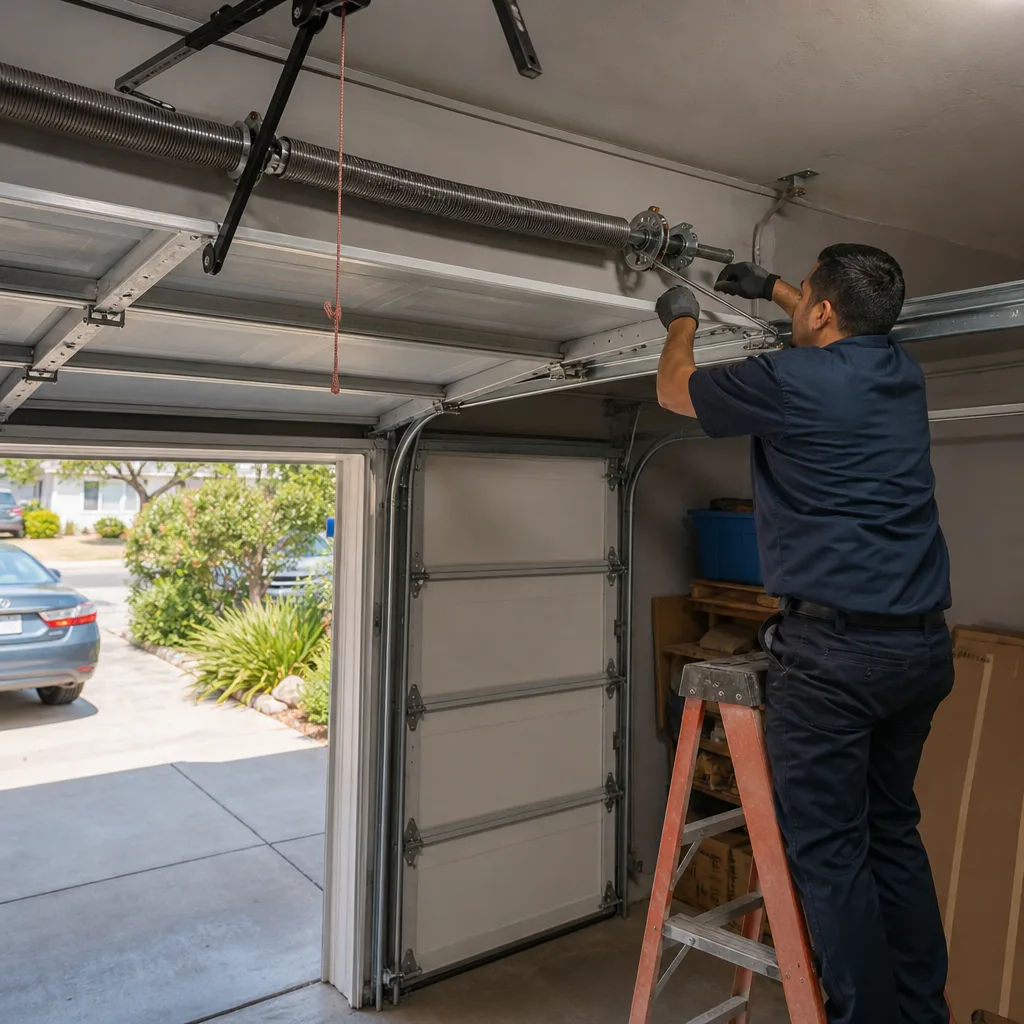
If you have read this far and identified one or more warning signs, the smart move is to have a trained technician inspect the door before the failure gets worse, as outlined in our How to Hire a Garage Door Contractor in Torrance: A Step-by-Step Guide. You can safely replace a remote battery yourself. You can lubricate the hinges and rollers. But spring replacement, cable replacement, track realignment, and any work involving the opener’s drive mechanism should always be handled by a professional. The spring in particular is deadly if mishandled. Do not attempt it.
For more guides & resources, visit our blog, or call Marlow Garage Door Repair Torrance-we offer free estimates in Torrance. Call (424) 999-9677 and a live person answers, 24 hours a day, seven days a week. We give you a written price before any work starts, and every repair is backed by our 365-Day Done Right Promise: if the fix fails within a year, we come back and make it right, free of charge. You’ll also get live arrival tracking, before-and-after photos of the repair, and a digital invoice you can pay from a link. That’s The Relay Visibility Guarantee, and it applies to every job we do.
See the difference
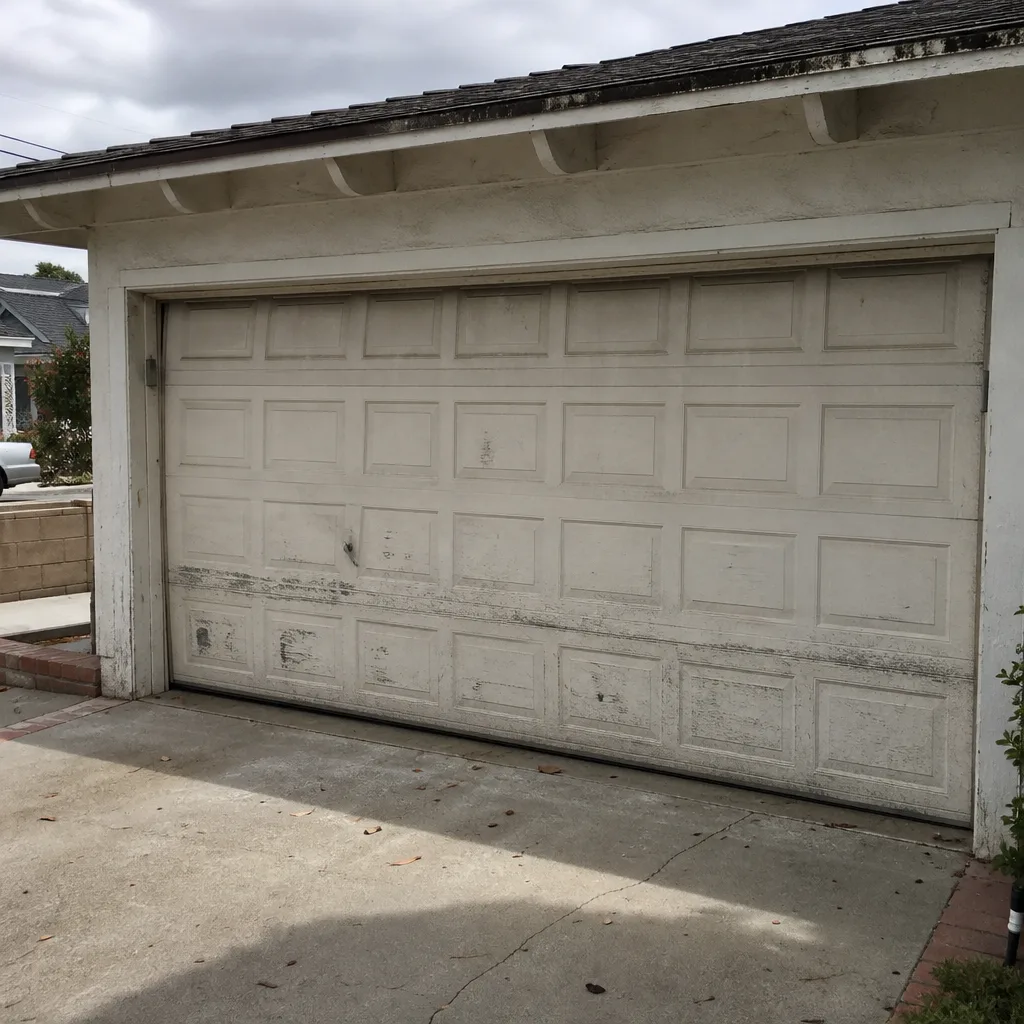 Before
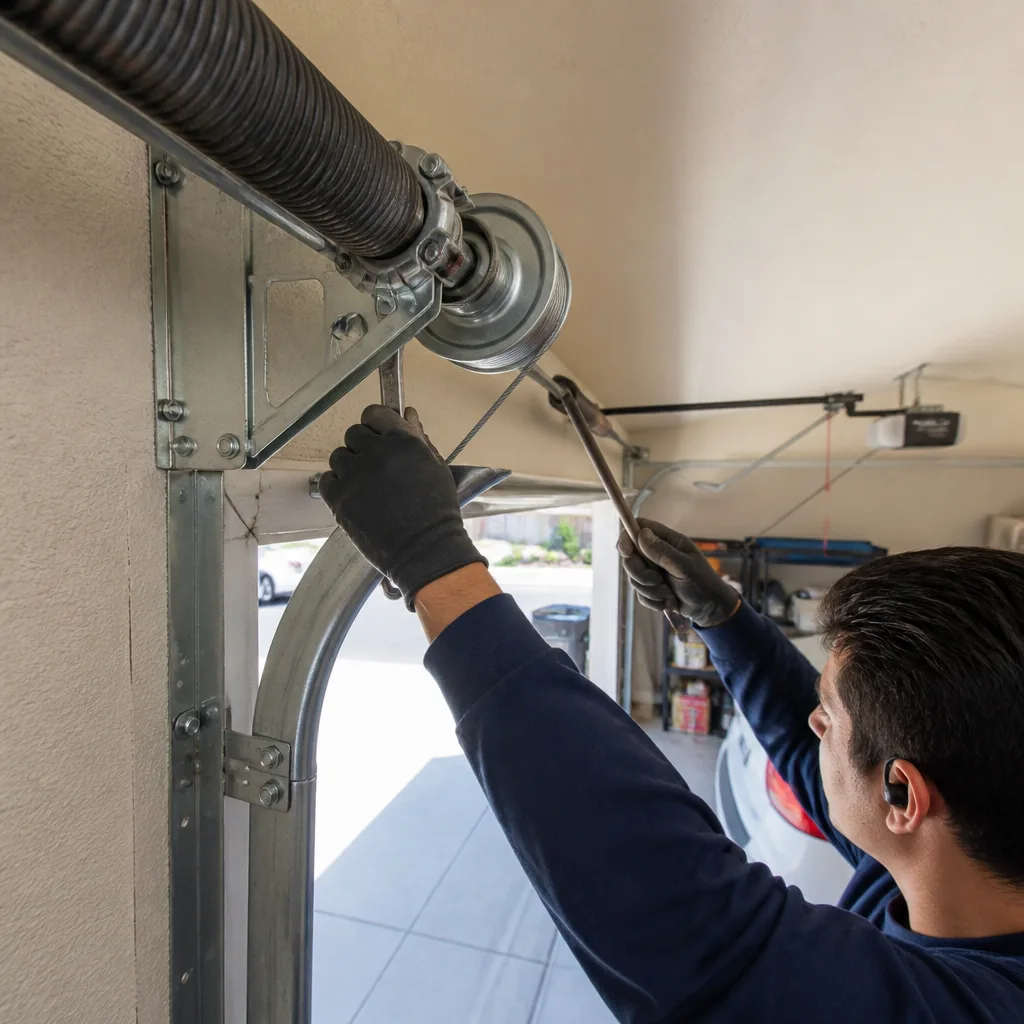 After
After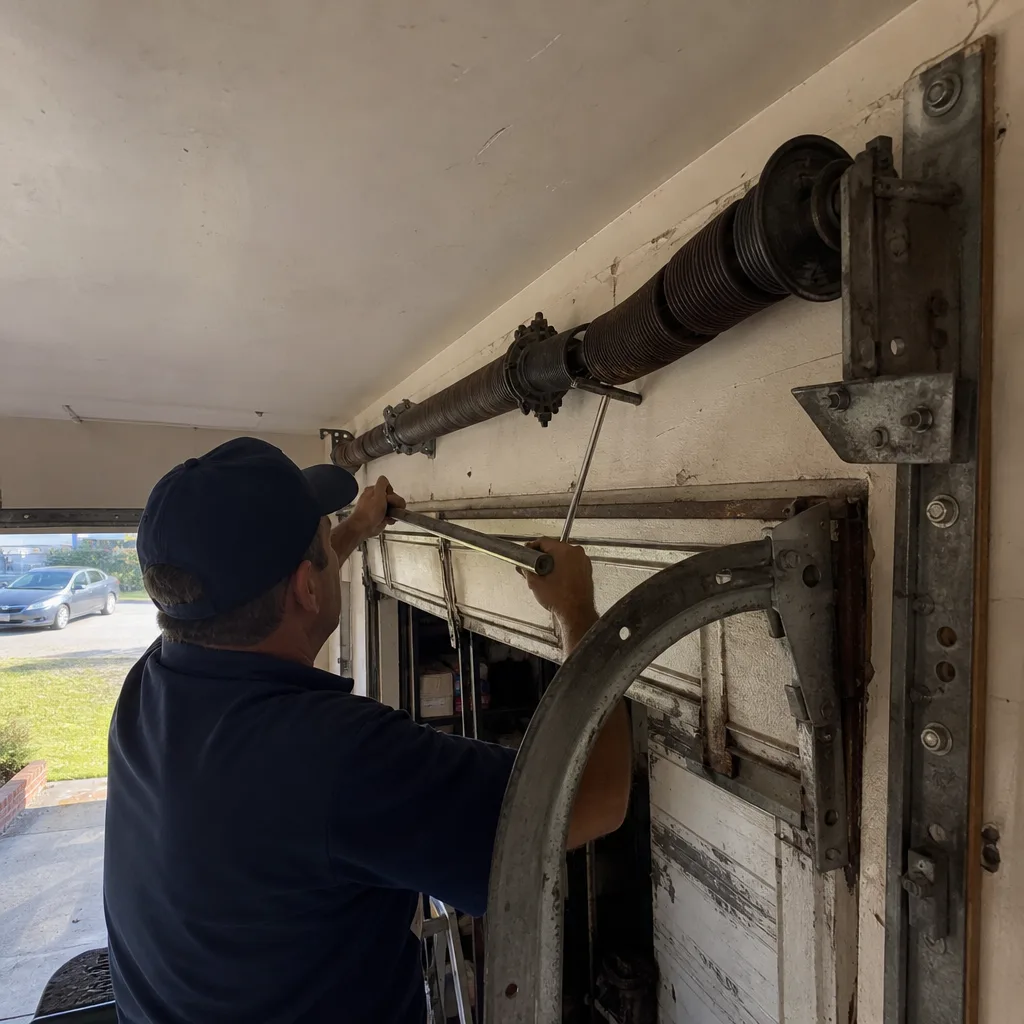 Before
 After
After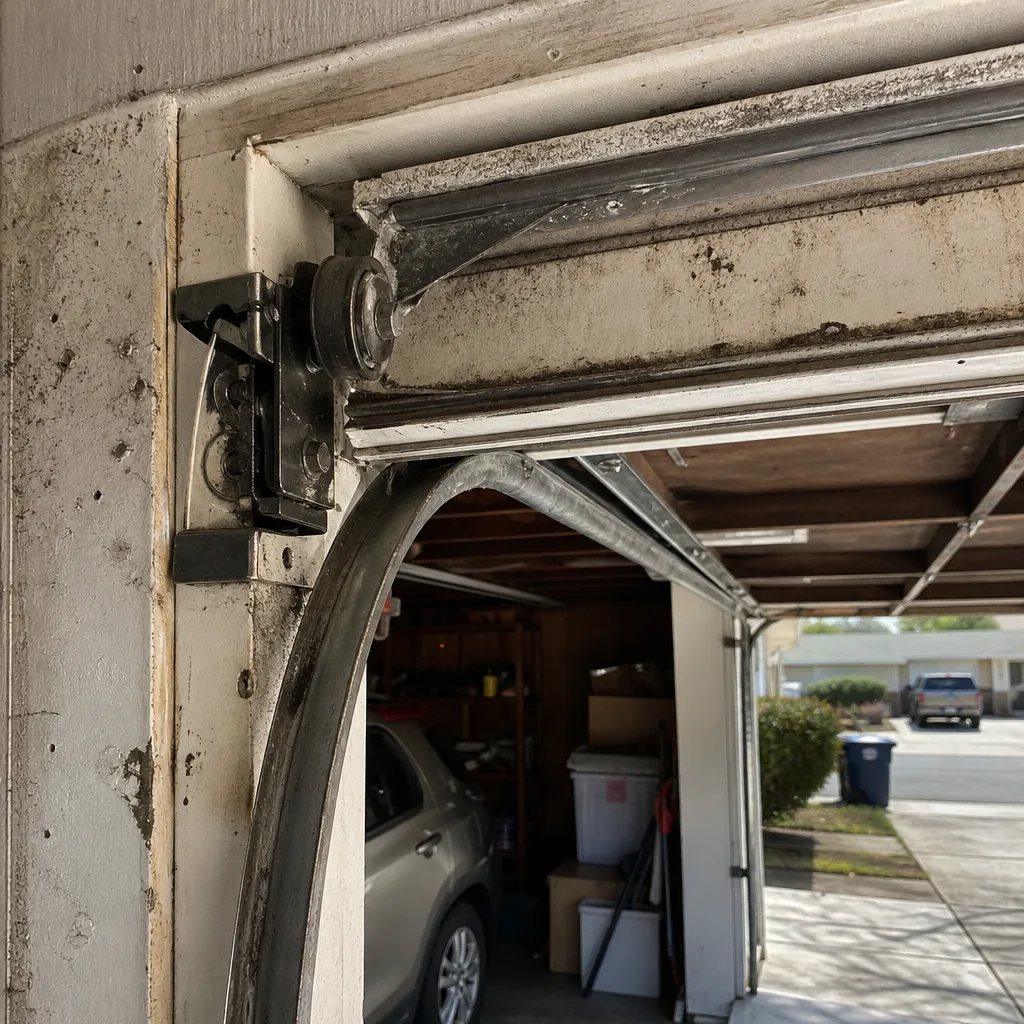 Before
 After
AfterFrequently Asked Questions
Spring replacement in Torrance typically runs between $180 and $340, depending on whether you need one or both springs, the spring’s cycle rating, and your door’s weight. You’ll see the exact written price before any work starts, and we honor that number. Call (424) 999-9677 for a free estimate.
Yes. Spring breaks are the most urgent garage door failure, and we treat them that way. Our technicians carry a full range of torsion and extension springs on the truck, so in most cases the door is repaired on the first visit. Call (424) 999-9677 and a live person will get you on the schedule.
No. The written price we give you before any work begins is the price you pay. We inspect the door, identify what’s wrong, and present the number. You approve it, we do the work, and the invoice matches. There are no surprises.
A loud door usually means roller wear, track misalignment, or hinge wear, depending on the type of sound. A grinding noise points to rollers or track. A rhythmic squeak points to hinges. A bang points to a broken spring. Each has a different fix and urgency level.
Most springs are rated for 10,000 to 30,000 cycles, which translates to roughly 7 to 12 years of normal use in a typical Torrance household. The salt air in coastal neighborhoods like Hollywood Riviera and Seaside reduces that lifespan slightly by accelerating corrosion.
Yes. We offer free estimates and inspections throughout Torrance, including Old Torrance, Southwood, and the South Bay area. Call (424) 999-9677 to schedule. You’ll get a written price and a clear answer about whether the door needs work now or can wait.
The Bottom Line
Your garage door speaks in sounds, speeds, and visual shifts, and it has been speaking to you for months. A grind is a roller problem. A bang is a spring. A one-inch hang is a cable or spring imbalance. Black dust on the floor is a coupler stress signal. Rust powder is a corrosion warning. In Torrance, the salt air and marine layer make every one of these happen a little faster, which means the smart move is to check your door quarterly and act on what you find. When the sign points to something you should not fix yourself, call a professional. Marlow Garage Door Repair Torrance offers free estimates, a written price before work begins, and a 365-Day Done Right Promise on every repair. Call (424) 999-9677 and talk to a live person today.
Written by Jaylen Ross, Owner at Marlow Garage Door Repair Torrance, serving Torrance since 2002.